

The Algorithm Doesn’t Want You Happy. It Wants You Hooked.
I used to spend hours on Pinterest building a life I wasn’t even sure I wanted because I had just learned what I was supposed to want. Before that, I was fine (mostly). Reading books way past my bedtime, taking grainy pictures on my iPad Mini, and just minding my business in a small town where the most aesthetic location was the Dollar General parking lot at sunset. But once I joined Instagram—right out of the fourth grade, mind you—I realized that I lacked the wardrobe, personality, and lifestyle that got the likes. It made me think that maybe I wasn’t built for a life that had any “real” value, since I didn’t have any social value.
When I’d upload my pictures or iFunny memes, the majority of the likes were from those scam accounts that offer to “paint” a mural of you and a few of your friends from school. Meanwhile, other 12-year-olds had nice cameras, ring lights, and brand deals. What I felt wasn’t exactly envy; I had already started to experience that thanks to the hellscape of public school. But it was something closer to shame. What was so wrong with me that I couldn’t make my life as profitable or as pretty as other people could?
But that’s exactly how it works, whether it’s anyone’s intention or not. Content curated to display a life without struggle becomes the standard. And when your life is full of actual problems—like health, finances, or loneliness—it starts to feel defective by comparison. Platforms and corporations depend on that feeling. Once you start actually believing that you’re not enough, they swoop in with the solution: products, routines, and identities to buy into, promising to make life better or palatable. And it works—until it doesn’t, because the finish line keeps moving and the algorithm keeps feeding on those doubts.
The Culture Of Comparison (And How The Algorithm Profits Off Of Your Insecurity)
It didn’t just happen to me. This is the shared experience for a lot of us—especially if your time on the internet wasn’t heavily monitored. Almost as soon as we could read, we were handed (or shoved into) this unexplored digital world before we even had a fighting chance to figure it out ourselves. It started off simple: sharing photos with our friends or keeping up with the Disney Channel stars we liked (Swagdaya, I love you). And then, somehow, it slipped into the deep end.
Hours spent choosing the right lyric or crafting a witty caption, hoping the effort would be rewarded with a few double taps from people mindlessly scrolling. That validation, once just a passing thought, became a form of currency and an opportunity for comparison. It was instinctual, a reflex, to stack our lives against others; even to pick apart what someone didn’t have as a way of making ourselves feel better. We didn’t even realize that we had fallen victim to a game we never agreed to play.
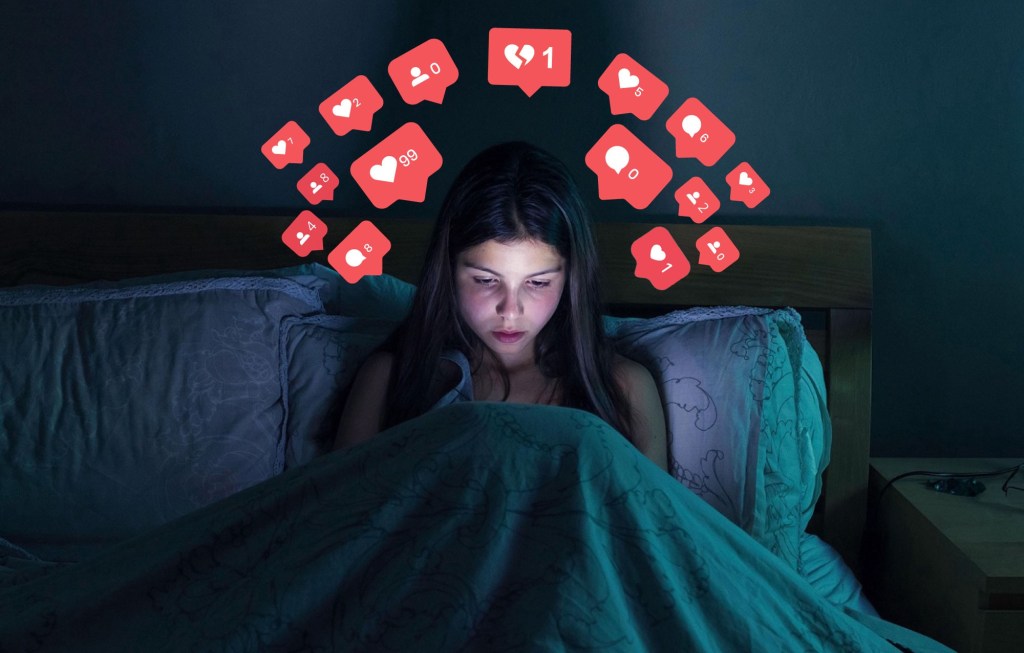
The algorithm doesn’t just profit from your participation; it benefits from your insecurity. The more you question your worth, your joy, and your productivity, the more you scroll. And the more you scroll, the more ads you see—ads promoting “solutions” to insecurities that the platform helped create. This may seem dramatic, but it’s exactly how these systems are designed. Studies from the American Psychological Association and Pew Research Center consistently show that increased time on platforms like Instagram and TikTok correlates with lower self-esteem and increased rates of anxiety, depression, and body dissatisfaction. Nearly half of teens now say these platforms are negatively impacting their peers—up from 32% in 2022.
And that’s where it gets dangerous: These are young people who are still forming their ideas of identity, worth, and visibility. If every scroll is subtly hinting that your life isn’t beautiful enough, productive enough, or soft enough, what’s left to do but start shaping yourself to match that mold? Except that mold doesn’t exist, at least not in a well-defined way. It’s all loose illusions that people shove themselves into. Deep down, we still believe that if we finally “get it right,” we’ll be rewarded by the algorithm. We’ll be noticed; we’ll feel valuable at last. But the job of the algorithm isn’t to fulfill anything, so there will always be the cycle of searching to no avail.
The Commodification Of Self-Love (Now In Three Colorways)
Go on TikTok right now, and you’ll find people from Millennials to Gen Alpha tearing each other down in the name of “necessary feedback.” Beauty has become ranked; people are assigning visual scores to others’ faces or using medical terms like “buccal fat” and “asymmetry” to diagnose what are regular human faces. It’s not critique, it’s cosmetic surveillance, and it’s often directed at minors or strangers who had the “nerve” to post themselves in their most natural state.
We’re supposedly in this golden age of self-love and self-empowerment, but it feels extremely…backhanded. It’s almost impossible to speak on it without being labeled as bitter or “too deep.” Any pushback becomes a personality flaw. God forbid you say, hey, maybe we shouldn’t have to strive to be perfect to deserve peace or love. Now I’m the hater.
And by all means, there’s nothing wrong with wanting to take care of yourself (please do!). What’s unhelpful is how quickly it becomes a commodity.
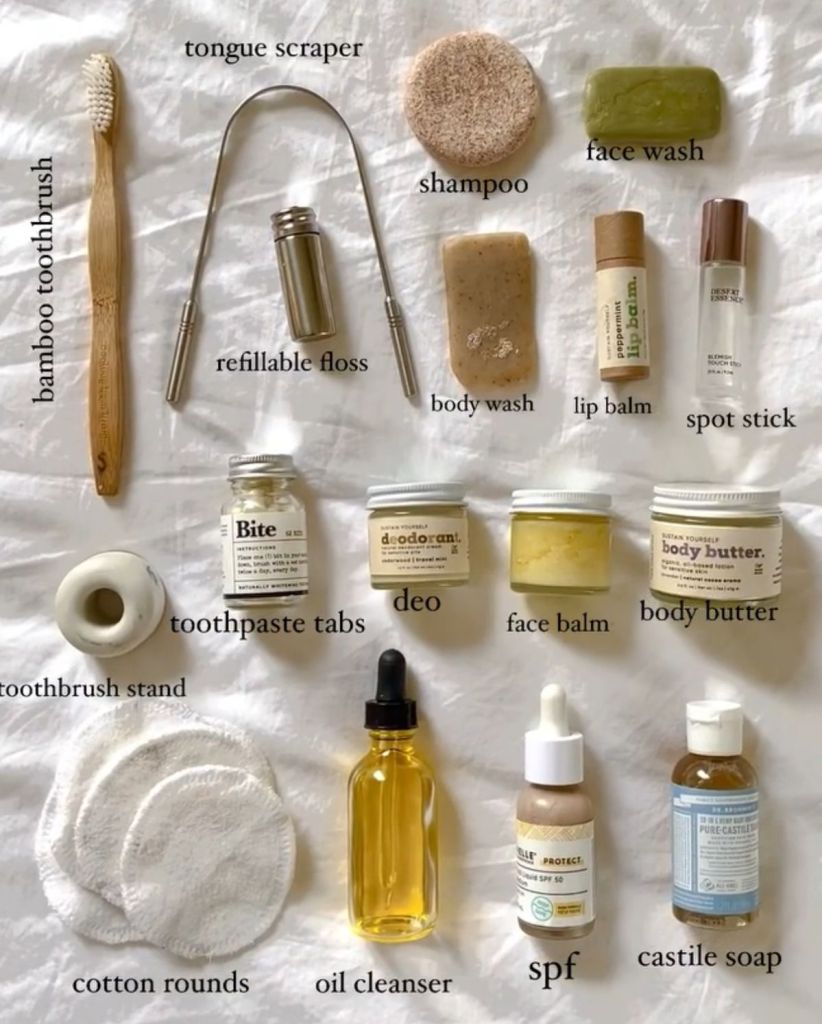
Click here for a seven-step skincare routine that makes you feel like a #GirlBoss!
Buy this guided journal that comes with a water bottle that has a motivational quote on it for $39.99 plus shipping & handling!
Photo Credits: cozyhomevintageshop on Pinterest
As Tricia Hersey in “Rest is Resistance” puts it, “The systems that exhaust us will never be the systems that save us.” She criticizes the way rest and care have been flattened into productivity tools with the goal of making you more marketable, balanced, and brandable. Not better, just tolerable to capitalism. Even the phrase “soft life,” which stems from Black women wanting to reject the grind mindset and rest, has been watered down to mean expensive robes and neutral tones. The original context was about survival, and the rebrand is about optics.
In 2024, an article published in Organization Studies explored “emotional labor in digital spaces,” and it found that people—usually women and marginalized creators—often feel pressured to display growth and gratitude even while going through pain. Because negativity doesn’t trend, and what’s the point of posting about your boundaries and routines if you’re not growing linearly?
If you’re still struggling, it’s your fault. You’re not manifesting enough, eating clean, or investing in your healing mindset. Growth has become a hustle where the struggles don’t come from addressing the actual obstacles of life but instead from documenting it in a picture-perfect way.
I won’t hate if you do love your sea moss supplements or your matcha latte that you drink while doing your five-minute gratitude check-in—that’s not the point of this article. If you only do that because you can get a good pic out of it, it doesn’t seem real, and it’s just a waste of time and actual growth. After a while, all the mood boards will start to blur, and the routines don’t bring clarity. They may not have been bad but they weren’t yours.
Joy In The Mundane (In Ways That Actually Work For You)
We’ve been conditioned to believe that joy looks like a checklist to complete before the day ends. But I’ve found that the joy that actually sticks is usually the least aesthetic thing in the world. It’s ugly-laughing alone in my room over a fan edit of Rhett and Link. It’s eating grapes on the porch with my little cousins. It’s keeping my headphones on in the grocery store so I feel like I’m in a movie montage. Usually, it’s a really good nap.
Joy (for me) isn’t subliminals on YouTube that’ll give me an “alluring personality.” It’s sweat. Noise. Getting through the day and still having something to smile about. That kind of joy doesn’t look good online, and frankly, it doesn’t need to. As Ross Gay says in “The Book of Delights,” joy isn’t always about feeling good but noticing the good, despite everything else.
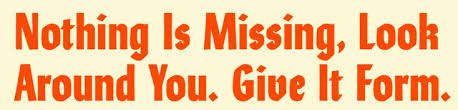
So, what if your version of joy isn’t brandable? Great. If it’s weird, loud, quiet, awkward, or invisible to everyone but you? That’s amazing. That’s the point; joy that doesn’t feel like a performance. Just something that makes you feel alive in the body and life that you already have.
Things That I Found Joy In This Week:
- Getting my dog (My Fancy Girl) a Puppuccino and watching her enjoy it
- Dancing on FaceTime with my friends (even though they made stickers of it later)
- Re-discovering the era-defining Gym Class Heroes’ Papercut Chronicles II album
- How good the air smells coming out of the air vents in my car!
- Seeing the girl I used to be in performing arts crew with graduate as the valedictorian
No algorithm told me these were valuable. There’s no trending sound to go along with them, and there’s definitely no urgent need to share them all over the internet. But the joy lives on, in moments that no one would applaud. If comparison is the thief of joy, then choosing to notice what you have right in front of you is an act of resistance.

 THE 20-SOMETHING FILES.