

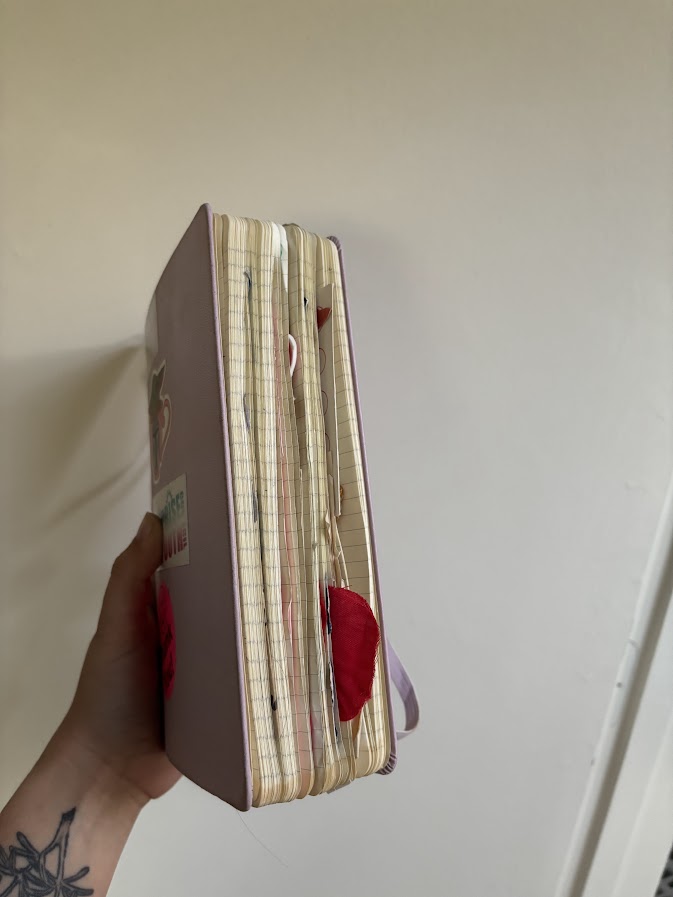
When I graduated from high school, I bought a baby pink Moleskine diary with my McDonald’s paycheck. I carried it with me for three years, writing on and off. I forgot that I had kept this diary with me long after it had been completed and replaced by new ones. While cleaning out my desk, I found it again.
After reading a few pages, I wanted to throw it at the wall. That person in my diary was obsessed with being desired and liked. She grew sometimes and then became undone over and over again. To be honest, I don’t like that person in the baby pink Moleskine diary. She is naive, messy, and problematic.
Thinking about the past and the self, I am reminded of Annie Ernaux’s “A Girl’s Story.” Although technically an autobiography, Ernaux uses the third person to explore her girlhood at a distance. The past self is externalized, recognized as different or even separate from the present self. Inspired by Ernaux’s inclination, I call that person in my diary “her,” and I remain “me.”
May 30, 2019
The diary begins: “Not to be incredibly cliché, but life seriously doesn’t move the way I expect it to or try to control it into being.” This moment comes right before a big college move and after her first breakup. She is being incredibly cliché. Calling it out doesn’t soften it. If anything, the acknowledgment made me cringe even more while reading it back. Her admission of seeking control adds to the cringing. There is something so youthful in believing that all major life events are in your hands, not just your reactions to them.
Yet, I question why I am so quick to think that I am better or more mature than that person in my diary. I still check my daily horoscope, look for mystical signs to point my career in a certain direction, and keep my good luck charms near me at all times. Maybe I don’t acknowledge it so explicitly anymore, but I still try to influence how life will move. Ridiculing her doesn’t show that I am better, nor does it make her admissions any less valid. It hurts us both.
Before judging any further, I try to remember that the person in my diary is really going through it. I know how these emotions resolve, but that person is so clueless about what is to come. Of course she writes melodramatically—she’s sad and heartbroken! When we look back at ourselves through diaries, I think the easiest thing to do is cringe. That person in our diaries is annoying and dramatic sometimes. However, I believe that in order to fully see the people in our diaries, we have to meet them where they were. Say to yourself, you didn’t know better. You couldn’t have. Then, give in to the dramatics.
December 30, 2019
“I love walking on campus and knowing who I am and what my purpose is, at least for the day,” she wrote. A hopeful turn. I don’t feel upset with her; she showed me that she had positive moments. There she was—walking around campus, listening to music, and learning independence. She was happy to just be.
That person in my diary has a different version of who she is versus who I read her to be. There is a confidence in this entry that, as I move further into my twenties, I find hard to hold onto. I don’t envy her, nor do I judge her. Instead, I admire her. I might even seek to emulate her.
We need to give our diary selves credit where it is due. I don’t love my diary self at times, but look at her go on this page! Instead of reaching for judgment, shift towards identification. I know that sense of contentment she describes here. I might not feel it the same way as she did then, but it hasn’t left me. Her confidence reminds me that I still have work to do on myself. Everything is different, yet here she is reminding me that warmth and growth are possible.
The positive moments we have recorded in our diaries echo in ourselves every day. Read your diary and look for them. Notice them in the moment and thank yourself for recognizing these positives.
August 7, 2021
A big time jump, I know. But she wrote, “Everything is different and there’s no way to remember how I’ve changed. The discipline to be consistent feels impossible to obtain. But I really really want to try.”
For a moment, it is like looking in a mirror. It feels silly to say because she is me, but something in this entry is closer to the present than the others.

Rather than focusing on what this entry shows me about her, I consider how I fulfill what she needed in this entry. In the present, I maintain her effort to keep trying to write. I contribute to publications, participate in readings, and still keep a journal. She wanted to write then; I want to write now.
But reading back the entry is how I fulfill the memorial aspect of her wishes. Part of this entry recognizes how she wanted to be perceived for efforts that might have happened outside of her diary. Not only did she want to be recognized for trying, but she also wanted to be remembered as someone wanting to try. I see her for who she wanted to be seen as by reading her entries, not by continuing her writing practice. This entry creates a reversal of reflection: her needs are fulfilled rather than mine. She wanted to remember; I remember her.
There is honor in recognizing that we wrote in our diaries for a reason. It could have been for release or a desire for recognition. See the self that wanted to be seen, and then write a new entry. Give yourself something to see again. If you wanted to be seen then, you probably want to be seen now, too. To grow, we have to recognize where we started from. And in order to do this, we need to give signs of life from where we were. Recognize your place as both rememberer and remembered.
May 15, 2022
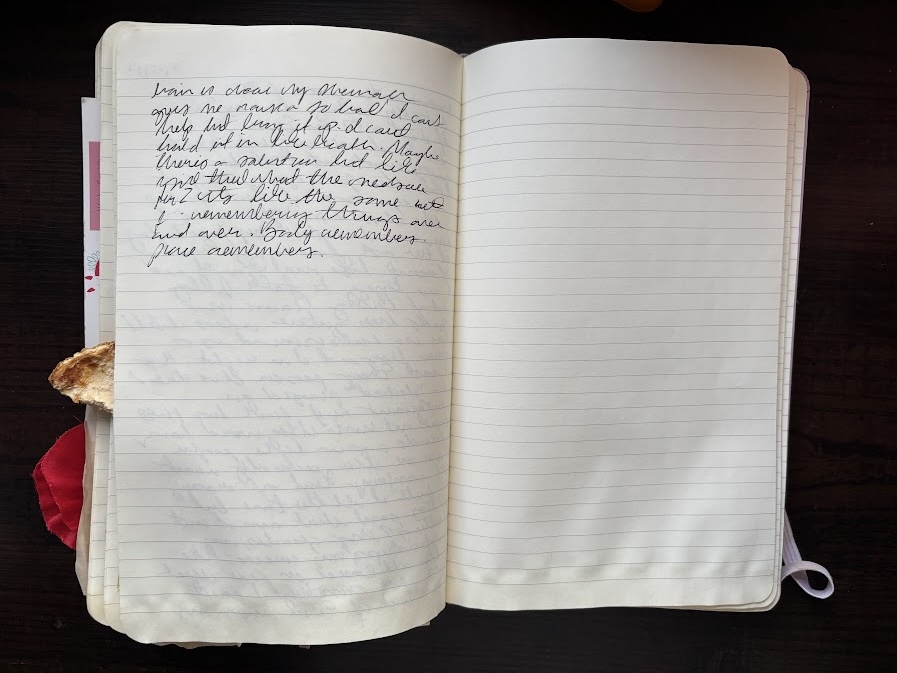
I reread this page on the same day, three years later. This page is the last entry I wrote. To be honest, there are about fifteen blank pages left. But I remember feeling the need to shed this diary and begin anew. The last sentences are, “It’s like the same, but remembering over and over. Body remembers, place remembers.”
Diaries are places we go to be with ourselves. Physical spaces change and can’t be returned to. But our diary selves are still there. To return to them is to go back to somewhere you already know. Yes, it is uncomfortable. Do it anyway. The diary will continue to take up space, wherever you have it hidden, regardless of whether you return to it or not. Choose yourself, whoever that person was. Read your diary again.

 THE 20-SOMETHING FILES.