

When I woke up to the 2024 election results, everything came to a halt. I had fallen asleep the previous night with the news channel still up on my phone and a prayer in my heart. Please do not let tomorrow come. Early in the morning, I woke up still feeling foggy. I went to text my friends, which is when I saw it. The dreaded text from a friend.” What are we going to do?” My house fell quiet as I sat in bed, waiting for my sister to wake up. Fear rushed through my body as I thought of what would happen next. Project 2025, and with it, the danger of losing education, healthcare, immigration protection, LGBTQ rights, and the terrifying list goes on.
When did the world become gray to you? When did you stop skipping major headlines and start paying attention, as everything you once knew now betrays you? I am a human services professional fresh out of university. I did not graduate with that wide-eyed, save-the-world mindset, but I still retain the rawness of two internships, research, group discussions, and the dissection of humanitarian issues. I have yet to be burned to the point of operating with loose morals. This is not something I say as self-praise but as an acknowledgement of an occupational hazard. I must be careful and try to prevent myself from becoming overwhelmed, doing more harm than good. I chose to take on the shortcomings of many, but my generation (Gen-Z) did not. We are still exposed and vulnerable to witnessing atrocities against humanity online and are not equipped with the proper tools to deal with the subsequent feelings and material outcomes. For us, this tension between the constant awareness of suffering and the perceived inability to help is the core of social apathy in the digital age.
The Digital Overload
Social media has undoubtedly become a central part of our world. It is embedded into modern-day culture and is Generation Z’s music hub, tabloid center, and, more recently, education source. In 2024, the Pew Research Center found that 48% of TikTok users aged 18 to 29 utilize the app to stay updated with political issues. It can be hard to determine what is political, but DP Global Politics defines it as “any matter regarding how power is distributed and its function within social organization.” This trickles down to how people think about and engage in matters that impact their lives, communities, and the world.
Generation Z is highly involved and deeply affected by the events unfolding in the world today. Some of us graduated from high school online due to COVID-19. Some of our university programs were recently defunded due to the current administration. And we all have been experiencing the effects of climate change more frequently in our lives. So much is thrown at us while we just want to figure out who we are as individuals. Now, the spotlight is on us to see how different we will be from the last generation. We are the new spending power, paving the way to the future, except it feels like no one really cares about our well-being. It is up to us, yet we are not making the big decisions. We can only watch the world unfold around us, hoping we make it out unscathed.
The Spectrum of Response
I am growing used to living in discomfort and disappointment with our society because it is my job, and I believe, despite the dysfunction, we can still find ways to help each other and ourselves. However, when I look at my peers online, I am met with two extreme sides of the internet: uncertainty, anger, and calls to action versus total oblivion.
The first extreme takes on the role of an “activist,” which I put in quotes because without the proper tools, framing, and support, it can appear merely performative. Are we shaming people for not doing enough, or are we finding solutions that enable more people to take small actions without negatively impacting their livelihoods and mental well-being? While hashtags can bring awareness, on-the-ground support and policy changes are also necessary for long-term reform.

Now, I define the second extreme as total oblivion, or completely disengaging with negative news. There are numerous reasons for this choice, and it is a choice. Anyone with access to electronics and the internet must decide whether to be informed or uninformed. However, I suggest social apathy as not being heartless but tired. Laurence Cox, a professor at the National University of Ireland, wrote about burnout in his 2011 paper, “How Do We Keep Going?” Activist Burnout and Personal Sustainability in Social Movements.” He defined it as a stress response characterized by exhaustion, drain, and cynicism. Though Cox primarily discusses burnout through a social work lens, I believe his definition can extend to Gen Z’s feelings of being overwhelmed. Let’s focus on cynicism, which often leads to withdrawal. We are disengaging due to stress and trauma, becoming numb to problems around us and in the world. Judith Herman, a psychiatrist and author, reiterates this as a pattern between becoming re-traumatized and dissociating to protect oneself, thus becoming numb, denying that issues exist, and constricting. We feel powerless because we fix things, but we cannot ignore them either, so we find a weird middle and freeze.
Whichever extreme we fall more along, we must find a balance between connecting with others and protecting our peace.
Extending Grace
We are all trying our best. It is not easy carrying the burdens of generational suffrage on our backs. The Annie E. Casey Foundation discusses the mental health crisis Gen Z is experiencing. Many report consistent feelings of anxiety and depression due to issues such as high housing costs, personal finances, and the impacts of climate change. We also all come from different backgrounds that we should consider when talking about social action. For communities that are systematically oppressed and more vulnerable to violence, safety is a top concern, which creates additional barriers to communal movements.
Navigating the Gray: Paths Forward

One great thing about our generation is that we are very open about our mental health. Even still, some of us are only cracking at the seams, which can go undetected. So we must check in on one another. We need to stop being chronically online. No amount of doom scrolling will alleviate a situation. We might not be able to control the content we see, but we can control how and when we engage. I personally have deleted TikTok and set app restrictions on Instagram and YouTube so that I limit my potential exposure to brutality and negativity. I try not to be on social media as often at night, so if I read or view anything, it does not go with me to bed. Limiting digital exposure is a crucial start, but not the end-all. We need to understand that change does not happen overnight. It is continuous, collective efforts from professionals across disciplines, including human services, working tirelessly behind the scenes to facilitate long-term reform.
The digital age has undoubtedly pushed our generation to a turning point, revealing a spectrum of responses from performative activism to understandable retreat driven by burnout. This “apathy” is rarely a lack of care but often a traumatic reaction to living in an overstimulated and unjust world. Extending grace to ourselves and others and acknowledging the distinct problems of intersectional identities and systemic pressures become necessary foundations for navigating this terrain.
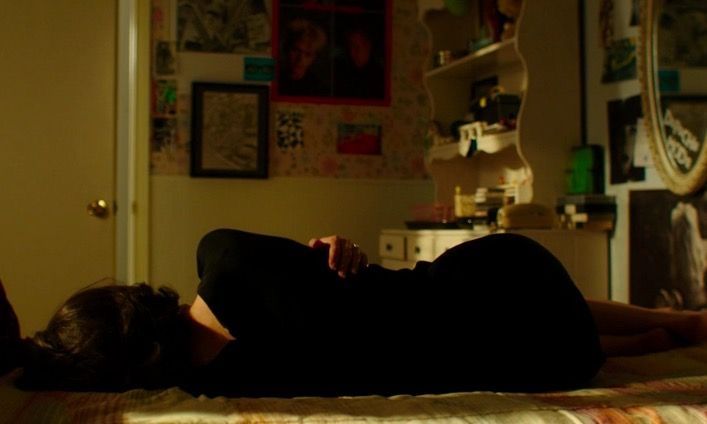
I still do not have everything together all the time. There are days when I do not even want to open my phone and instead turn over in bed. But I do. I get up. Resilience is not choosing between constant outrage and complete detachment. For me, it is simply choosing to live authentically, which means advocating for the rights of others, watching nostalgic cartoons, and being with my loved ones. How we show up may not always be perfect, but it does matter. What does resilience in a turning world look like for you?

 THE 20-SOMETHING FILES.