
There are three steps to go about processing your unemployment status.
- Browse LinkedIn, Handshake, Indeed, and whatever else to apply to something… anything.
- Moan and groan about the job crisis, the housing crisis, maybe the everything crisis at this point.
- Visit an art museum. More than a place for escape and relief, the art museum inquires and engages your relation to the piece in front of you and even the world around you.
Last summer, my college graduation and growing pile of rejected job applications resulted in an excess of free time. Time and time again, I’d hear, “Comparison is a thief of joy”. Still, it was hard not to compare myself when every other friend or acquaintance had a summer internship or a job lined up for them. It was hard not to feel as though I was falling behind.
I didn’t want to dwell on this forever, though. Free time had always been something a (former) student, like me, looked forward to. It was time to tend to my curiosities.
Time spent on books, literature, and art is never wasted. To be a part of the world is to engage with it. Whilst keeping myself busy across the variety of job-seeking platforms and lukewarm attempts at networking, it was just as productive and useful to attend to my cultural curiosities. Friends asked me, “What’d you get up to today?” and I would gush about a work of art. Somebody had to liven up these conversations. We can’t all be talking about work after a long day of work.
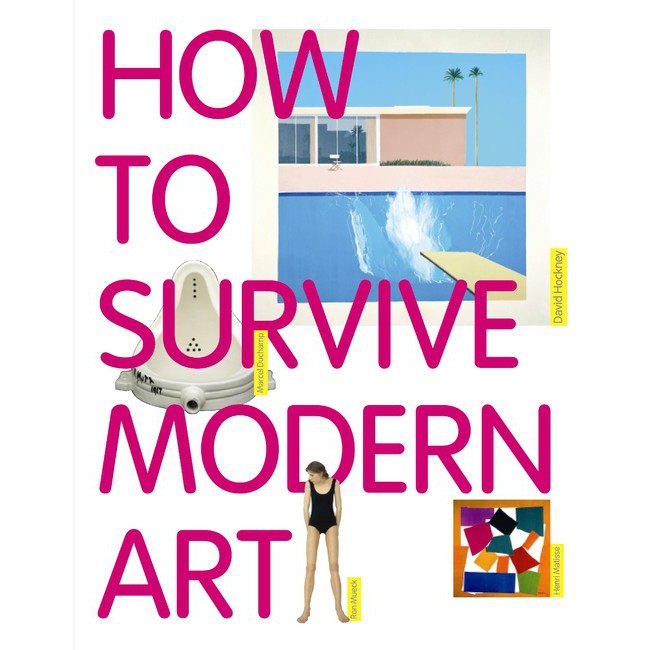
Besides these art excursions, I also visited the library. There, I encountered a book: How to Survive Modern Art by Susie Hodge. It was almost as though this book was waiting for me! Flipping through its pages, the book opened my eyes to just how vast modern art is. I mean, one could say a book about art is something like an art museum. To engage with its audience, art historians and other contributors pose questions for readers to ponder over as their eyes gaze at an artwork on the page.
Previously, I typically leaned towards older movements in art history, especially Impressionism, Post-Impressionism, and other smaller movements of the 19th century. How can I not with all of its broad brushstrokes and unconventional play on light and color? Anything non-abstract, I can work with. Still, there’s something about abstract art that I can’t deny or take my eyes off of. Much of it asks for a viewer’s patience. Sometimes, certain works click immediately while others entail some more mulling over.
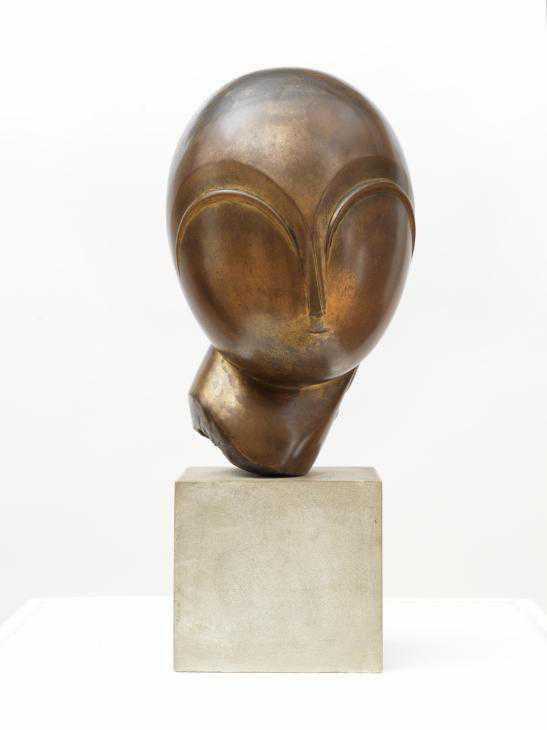
Within Hodge’s book, though, this one clicked with me: Constantin Brancusi’s Danaïde (1913). Brancusi’s bronze sculpture is a portrait of his art student Margit Pogany in which her features are refined to clean lines or the “purest, simplest, and most descriptive forms”. What made the story more endearing was that Pogany recognized herself. From her face to her hair in a chignon bun. So, even with its abstract form, Pogany’s instant recognition was a testament to the artist’s image and memory. The abstract nature of this work seems to get at what we pay attention to the most when we look at each other. No blemishes and imperfections that we think too hard about, only the shape of someone’s head and their facial expression.
Still, the cherry on top for me was the smile on her face. The sculpture was already harmonious and maybe even serene in all of its smoothened, curved bronze; its emphasis on her large eyes and strong brows spoke to what came to mind when the artist thought of the student. To me, her small smile added a playfulness and softness all at once to something already pleasant to look at.
Looking at an artwork through a book engages the viewer’s curiosity and imagination. Of course, the same can and has to be said (if not further elevated) about going to the art museum, a gallery, or a collection. I stroll towards the entrance and take in the architecture of the place. Inside the museum, I get to wander around and explore as much art as possible for as long as I like. Art museums introduce visitors like me to modern and contemporary art that I may not have encountered before. The hours spent there are just as productive and enriching. Every step is curious and intentional as I move from painting to sculpture to installation, from one floor to the next.
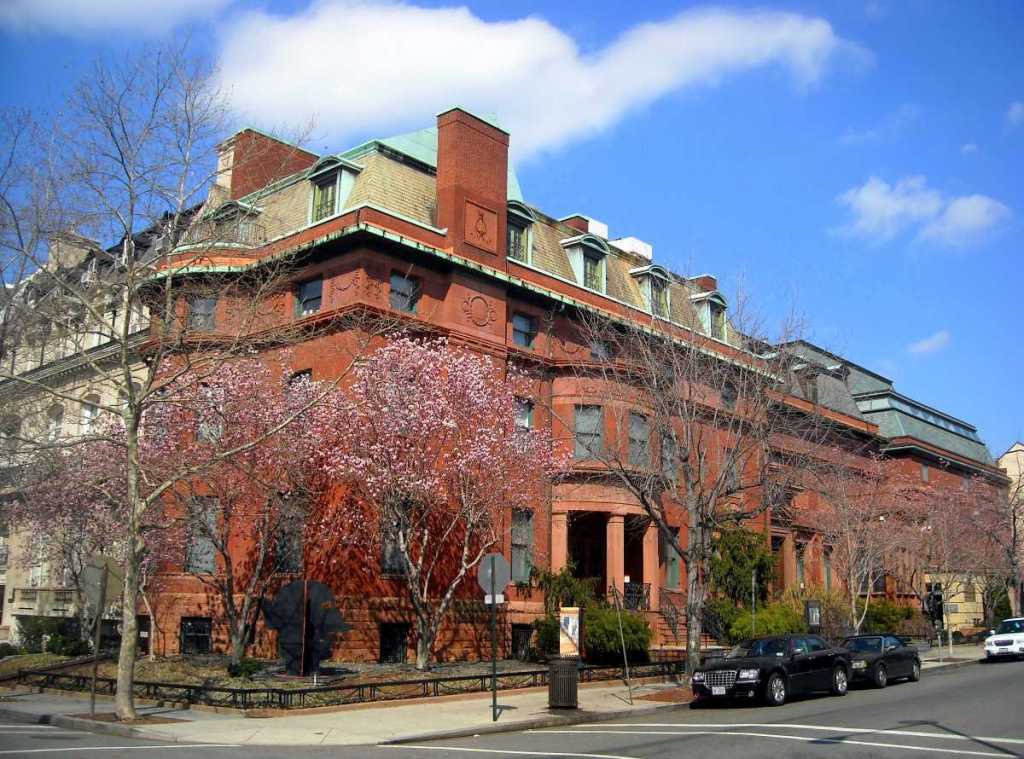
At the Phillips Collection in Washington DC, dubbed as the first American museum dedicated to modern art, founder Duncan Phillips argued that a gallery “can be a meeting place of many minds”. That an art museum is a space where people can share their perspectives, explore their values, and learn about themselves and the world around them. This museum’s approach to engaging with art is unique in that there is little wall text. That is, Phillips strongly encourages us to simply look and see where our eyes wander and focus on and what personal feelings and experiences are being evoked.
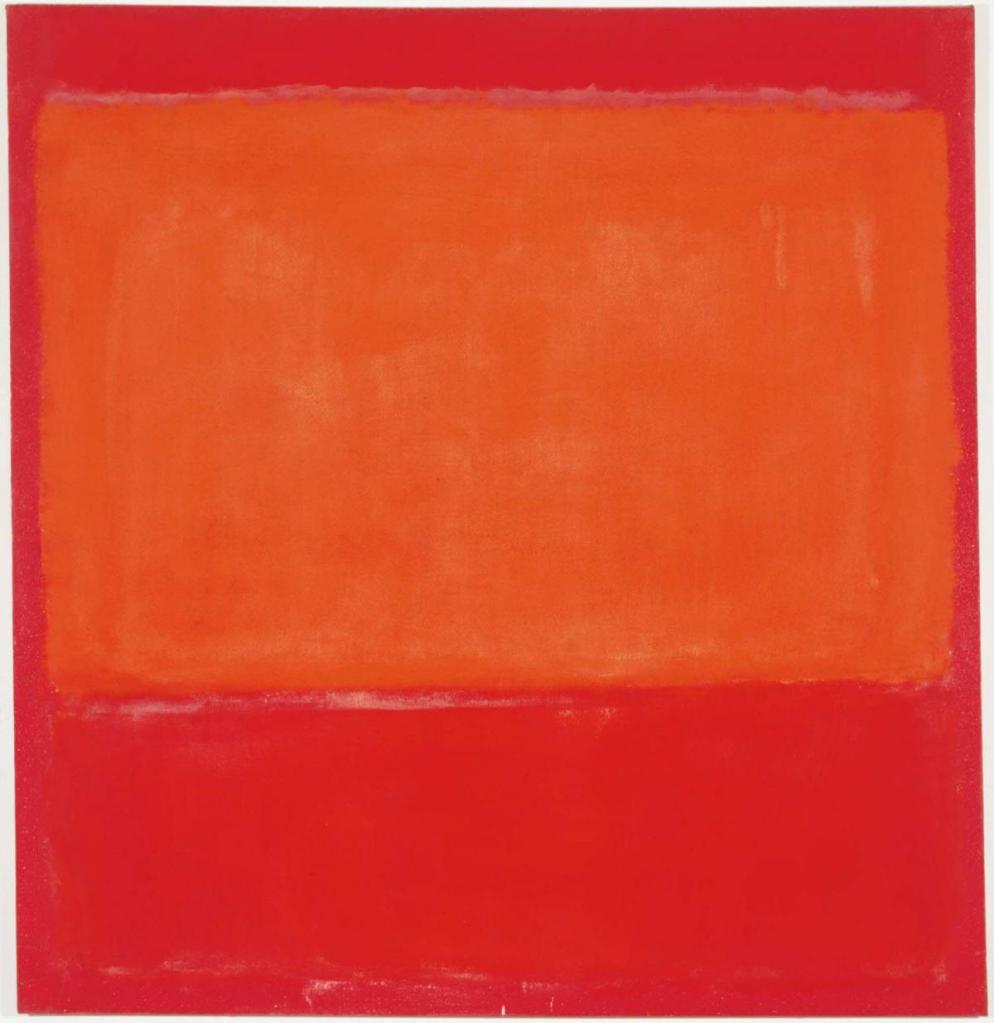
The Phillips Collection let me ponder over modern and contemporary art. Question what makes it so contemporary and why it was effective (or not) to me. At some point, modern and contemporary art concerned itself with the exploration, delivery, and abstract nature of color. With this in mind, I’m not sure what to make of it and if I like it entirely. For one, the museum’s Rothko Room was small, in a “corner” of the museum, and dimly lit with a slight chill in the air. I learned that Rothko himself wanted the lights of the room to be lowered to enhance the resonance of the colors, to encourage quiet contemplation. The room had no chairs, only a humble bench. All of these elements urged me to have a moment of introspection, to recall previous memories when I focus on a block of color, the lines (or lack thereof) between the colors, or anywhere else on the canvas. Inside this room, I stood directly in front of the four paintings: Green and Maroon (1953), Green and Tangerine on Red (1956), Orange and Red on Red (1957), and Ochre and Red on Red (1954).
With the room being dark, all I could do was stare at the colors before me and really contemplate or sit with the feelings that stirred in me. My favorite of the four ended up being Orange and Red on Red. I think it’s the brightness of the orange that bounced off of the canvas despite the darkness of the room that stayed with me. Orange isn’t a favorite color of mine, but I truly appreciated its vibrant nature here. When my eyes traveled downward, the transition from orange to red was nearly seamless. With this piece, I felt light and warm even when there was neither sensation in the material world. Sitting on that bench, in that dark room, that painting recalled memories of my childhood. I stayed with this Rothko the longest as this painting had the most effect on me.
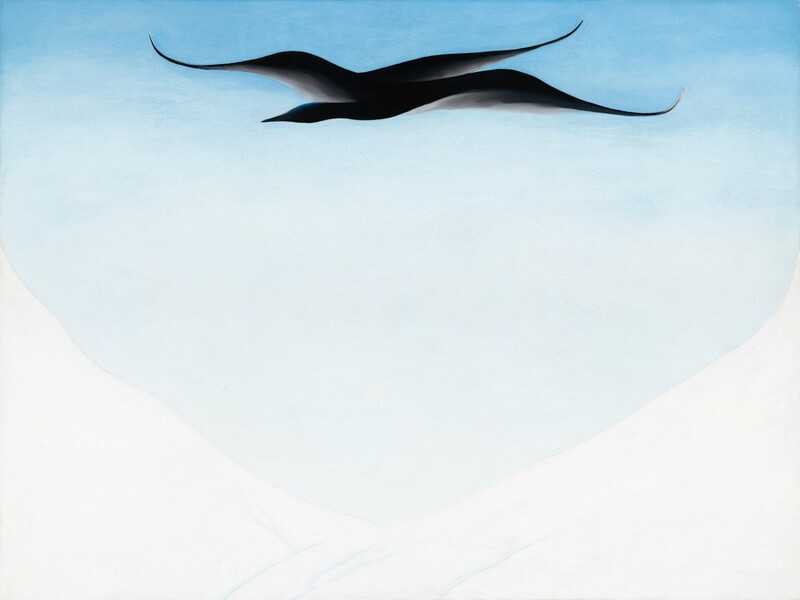
Another time, at the National Gallery of Art, I stumbled upon what is now a favorite work of Georgia O’Keefe’s: A Black Bird with Snow-Covered Red Hills (1946). Earlier that day, I was feeling particularly low and unaccomplished, so I quickly made my way to the National Gallery to seek reprieve and comfort. So caught up in my head, I sped through the ground floor but I stopped myself when I saw this painting.
The beauty of an art museum is that this stopping of one’s tracks is bound to happen to anybody at any moment. Your appreciation for the arts could range from being an art history buff to a curious peruser to a passive visitor. The unemployed person can fall anywhere among these three. This pause that happens to us, or at least to me, is what makes art museums worth coming back to. Time passes by a little slower inside these rooms and my jaw unclenches. More than escapism, I come to the art museum to live in real time.
While I was familiar with several of O’Keefe’s flower paintings and some of her landscapes, I had never seen a painting like this. The black bird held my attention immediately because of its dark contrast compared to the light background. I marveled at the outline and shape of the bird. Sure, it’s just a bird, but I think it’s the free and open movement of the bird and the painter refining it to smooth lines that really drew me to it. Similar to Brancusi’s sculpture, the bird is abstract, yet there’s something simple and pure to it.
The hills themselves are splendid as well, how they’re right there as if the viewer is also among these snow-covered hills. Looking at this painting, I can feel the crisp chill of the winter air and hear.. nothing. Nothing except maybe the black bird’s song. There’s something to be said about the title, too! Why red hills? If you squint, can you see them or is there an undertone of red? (I can’t and didn’t, despite being in person). Is this an inside joke of O’Keefe’s that we don’t know of?
In transferring this wintery landscape onto a canvas, O’Keefe does not reduce the natural landscape by taking out the finer details. Instead, she celebrates and highlights the natural world, through the modern art work, something that we can take for granted. Winter may seem plain at first glance but the minimalist simplicity of the painting relishes in the cold and prompts the viewer’s senses and imagination to partake in nature with O’Keefe herself.
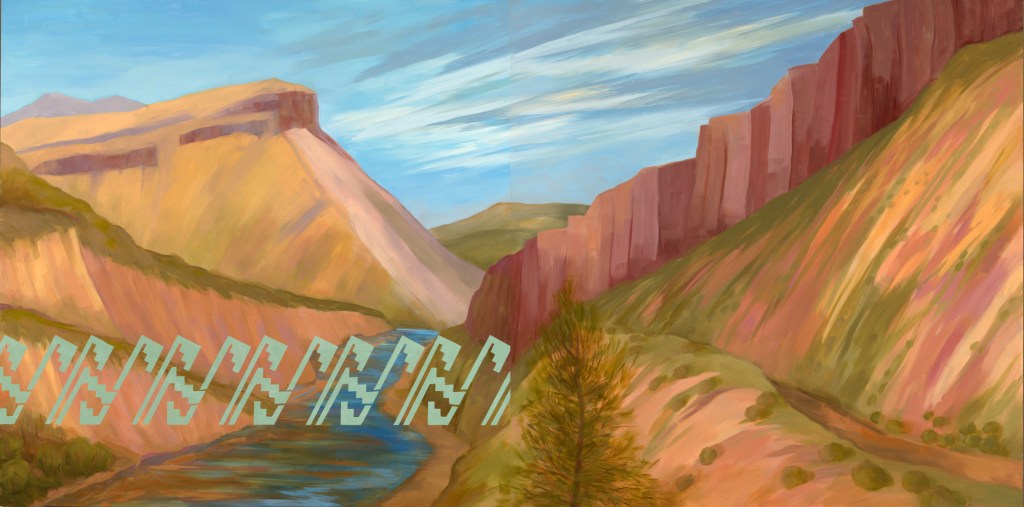
A more contemporary landscape painting, though, can be found at the American Art Museum. Pictured above is an oil on canvas by Kay WalkingStick from her visit to New Mexico’s Rio Grande in 2011. WalkingStick’s use of warm colors here evoke peace and tranquility. The blue of the sky is light and airy with its spare clouds whereas the blue of the flowy water is a darker hue. The mauves, greens, and yellows of the rocks contour and soften them all at once.
Orilla Verde at the Rio Grande depicts a ridge along the Rio Grande River in New Mexico that the artist visited in 2011. WalkingStick later saw Ancestral Pueblo ceramic vessels from the same area in the collection of the Smithsonian’s National Museum of the American Indian. She completed her painting by stenciling patterns inspired by the design on these pots across its surface. Does the pattern distract the viewer, us, from the rest of the painting? No, it is an assertive declaration of Indigenous presence and persistence, marking the depicted territory as Native land. WalkingStick’s reference to these ceramics speak to Indigenous presence and persistence.
Such a reminder makes me appreciate the natural landscape even more. Her efforts of cultural continuity, of Native presence and persistence, imbue onto the painting a sense of spiritual weight and memory. That is, Indigenous people have been here, that this is their home, and they will continue to be here. Leaving the American Art Museum, I embraced how art functions as a way for everybody to express cultural heritage and memory and expand on my relationship to being American and my place in the country.
In hindsight, am I the unemployed friend on a Tuesday? Yes, yes I am. But I’m learning and reminding myself that it’s not embarrassing and shameful to get up to something outside of a professional environment. It’s more helpful to myself to get out of the house than to lounge around all day. There is always more to life than doom-scrolling on LinkedIn. It’s good to close the laptop lid. It’s good to put away the phone. Even better to go on Do-Not-Disturb to fully immerse oneself at the museum.
It’s important to view art, to make sense of it as best as I can while I’m figuring out the other parts of my life. In making time for art and carrying myself to the art museum, unemployment becomes less stressful and more meaningful. I get to support the arts during a time where their presence and purpose are being challenged now more than ever. I will find a job, eventually. I certainly have to if I want to be able to attend more museums in the future. In the meantime, redirecting my ruminations and concerns into a new pastime, is a reminder to get out of my head and step into the world again.

 THE 20-SOMETHING FILES.