Editor’s Note: To protect the privacy of the sources, all interviewee names in this article have been changed.

Behind every great man is a great woman, who should seriously consider getting an MSW.
I have, perhaps, a hot take: Everyone needs therapy. Realistically, you can’t get through life for twenty-something years and not have been through some mildly traumatic event that has affected your mental health. Whether it be from family, friends, your career, or romantic relationships, life continues to throw punches at every living individual, so it is safe to say that everybody needs a professional to help them heal from the jabs. Yet, according to the American Journal of Men’s Health, “mental health among men often goes untreated because they are far less likely to seek mental health treatment than women.” So, I wondered, if men do not seek professional help, who do they turn to?
Suddenly, moments in my life flashed before my eyes of when I’ve given men in my life a shoulder to cry on, my two cents, my time, and my energy. And all without financial compensation! As a woman who has been in therapy for 3+ years and once had a therapist tell me that I would make a great therapist (the best compliment I have received to date), I know the quality of my insights and my support, and I feel robbed.
Upon this realization, I figured other women may have gone through this, and so I sought them out. I interviewed women of varying ages, and they spoke about their experiences as surrogates for therapists in men’s lives.
The workplace is a common breeding ground for such relationships, as we learn from the tale of Kamsi and Tayo.
Kamsi (24) and Tayo (26) quickly bonded over their shared experiences in their career field, resulting in a friendship of over two years. They often confided in each other about microaggressions and the many barriers they faced as Black professionals. For Tayo, however, the vulnerability did not end there. He began to confide in Kamsi about issues within his familial and romantic relationships.
“It was just really stressful…I always felt like I was worrying for two people.” – Kamsi, 24
Kamsi’s support wasn’t solely emotional but also career-based, as she helped him workshop several aspects of his grad school application when they both decided to apply for their PhDs. This support was, unfortunately, not reciprocated. “He was very self centered,” Kamsi disclosed. “Even as we were applying to grad school, he never asked me ‘How is it going?’ ‘Are you stressed?’ ‘Do you need help with anything?’”
Despite often acknowledging the merit in Kamsi’s advice, Tayo rarely ever did anything to change his situation. Kamsi finally felt the need to set a boundary when it came to Tayo’s last minute decision to not apply for grad school.
Initially, they had both agreed that the ranking of the PhD program did not matter as much as applying, so they would simply apply with their highest score, no matter what it was. However, Tayo later concluded that he wouldn’t apply because “it would be a waste of effort to apply with that kind of score.”
Kamsi gently told him that she didn’t think it was a good idea because Tayo had confided in her multiple times about how getting his PhD would drastically improve the quality of his life. Despite much back and forth, Tayo’s decision remained, so Kamsi let him have it.
“I told him ‘I understand that you’re not going to do this, but you constantly telling me about how you think your life will be ruined if you don’t get a PhD is stressing me out because I’ve told you what to do and you don’t want to do it’,” she recounted.
Unsurprisingly, Tayo responded to this boundary by sulking and making cryptic comments about “friends that don’t show up for you in the appropriate way.” Kamsi noted that this was probably the beginning of the end of their friendship.
Anjola (25), recalled her romantic relationship with Mr. Big. They spoke to each other about the happenings of life, as couples often do. However, Anjola felt that it wasn’t much of an “equal playing field”. She would rant to and seek advice from several people in her life, whereas it didn’t seem like Mr. Big had many people that he felt he could trust enough to confide in.
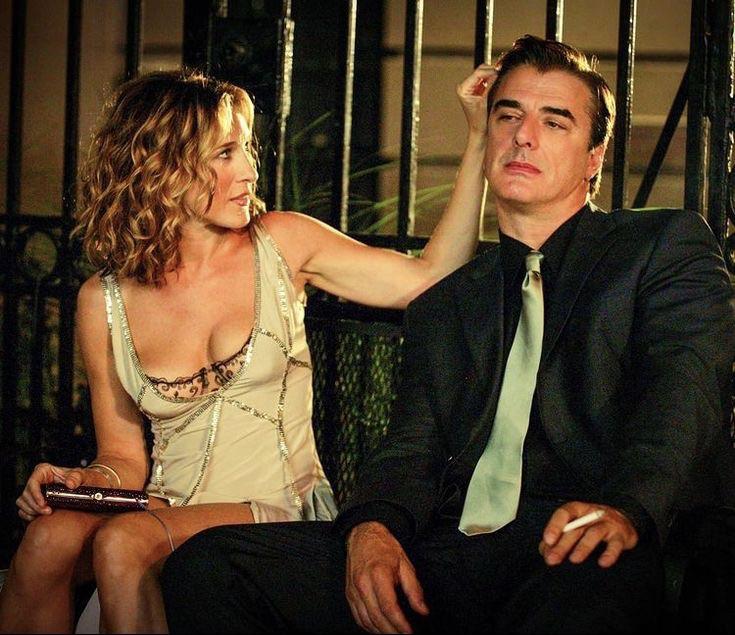
Image from Reddit
“It was a bit draining at times, not solely because of the reliance but the unwillingness to really do anything. So, it just kind of felt like a constant loop” – Anjola, 25.
This theme of rumination and inaction appeared in both Anjola’s and Kamsi’s interviews. They also both felt that the men in their lives behaved as if “they were the only ones allowed to have problems.” This is the key difference between speaking to a licensed therapist and turning a girl friend into a therapist. Professionals are literally paid and trained to cope with a multitude of issues. It is their job to listen and give advice to the best of their ability. For the average human being, frustration and exhaustion are valid responses to one-sided, emotionally demanding relationships.
Anjola also noted that Mr. Big often lashed out at his loved ones when he was feeling intense emotions. She believes this lack of emotional regulation is due to the fact that men don’t interact with their emotions often. She once told him, “Just because I’m a safe space that you can open up and be vulnerable with doesn’t mean that you get to treat me or anyone else like crap.”
This decree caused Mr. Big to withdraw time and time again. Anjola concluded by emphasizing how this situation showed her the disparities between how men and women are socialized from a young age and the consequences of that.
The history of women providing complimentary emotional support to men also exists within familial relationships, as was the case between Demi and her older brother, Bola.
When Bola was going through a difficult breakup, Demi lent a listening ear as Bola voiced feelings of loneliness, inadequacy, and fear of not finding someone else. Although he often thanked his sister for her support and insisted that he was okay, Demi revealed that she couldn’t help but feel anxious. Her brother lives in a different country and she constantly worried that he was hiding his true emotions and intentions behind the phone.
“It was genuinely distressing seeing him sparkless so I felt a lot of panic about scenarios my mind would create…based on what he’d tell me or where my imagination went.” – Demi, 27.
Demi also highlighted the “natural obligation” she felt to be there for her brother in one of his lowest moments. This feeling, surprisingly, wasn’t exclusive to just familial relationships. Most of the women I interviewed felt the need to support the men in their lives because they cared about them, despite that level of care often not being reciprocated.
Image from Medium
Both Anjola and Demi revealed that they wish they had encouraged the men in their lives to seek professional help sooner. “I definitely don’t think I was equipped to handle this but I’m always touched that he felt safe enough to open up to me,” Demi concluded.
Perhaps the most peculiar account I received was the story of Zenebu and a random man at her college campus who insisted on taking her on a coffee date. Despite multiple attempts to decline his offer, Zenebu revealed that “he was so insistent even to the point of saying he would accompany me on running my errands; hence, I finally gave into his request to buy me coffee.”
Zenebu’s reluctant “yes” to an impromptu Dunkin’ date unexpectedly resulted in a therapy session, where this random man detailed personal information from his life to her. From his brain disorder to his abusive mother, and even the murder of his brother, this man left no stone unturned. He also disclosed that he had recently been released from prison, where he served time for attempted murder. On the list of previously approved first-date topics, I’m not quite sure childhood trauma made the cut.
To make matters worse, she later found out that this man was actually a serial offender. ” [The] same thing happened with another girl I knew,” Zenebu added. “The same guy had insisted she let him buy her lunch or sit with her at lunch or something and also trauma dumped.”
Image from Tenor
I know these accounts probably have you side-eyeing the men in your life, but it’s not entirely their fault. The system paints women as nurturing and men as strong leaders, putting lasting labels on individuals from a very young age. Girls grow up to be the women always offering help, and boys grow up to be the men that never learn how to ask for it. The outcomes of these quasi-therapeutic relationships show that the patriarchy, contrary to misguided beliefs, benefits no one.
To the women reading this and thinking, “Oh my God, this is me”, it’s never too late to prioritize yourself and quit that unpaid internship.
To the men reading this and thinking, “Oh my God…this is me” (derogatory), your feelings are valid but your means of seeking help are not. Save a woman, see a therapist.